
Introduction
I have immense respect for crop farmers even though I’m useless as a grower or crop farmer myself. These guys are foundational to our society and without them we all perish. They also happen to be the first SSIs(Self Sovereign Individuals), so we would do well to follow in their footsteps.
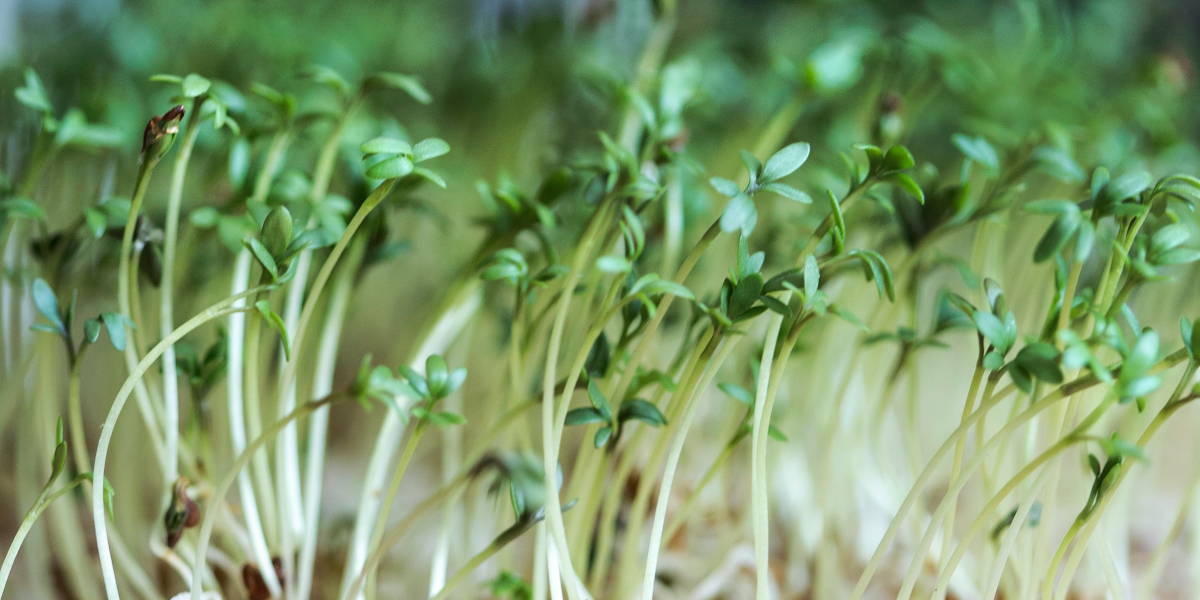
Growing food is hard, but the simplest most brain dead place to start is by growing Broccoli sprouts🥦. A five year old can grow these, so basically anyone can grow them; and this is a great place to start becoming an SSI(Self Sovereign Individual) with respect to food.
What you need
I buy my seeds from SeedsofAfrica. Their seeds grow well even in winter. It’s dirt cheap costing around R115(15k Sats) and last for months.
I grow using a kit which I got from KitchenGardenSA, but they’re also available on Takealot. You don’t need growing kits, but it makes bulk growing much easier. If you prefer not use a growing kits, a plain old 1 liter glass jar with a porous cloth can work just as well.
The basic process is that you add a tablespoon of broccoli seeds into a one liter glass jar, rinse the seeds daily with water for a week and they’ll grow to fill the jar. Simple as that.
You also don’t need soil, lots of space, or patience.
Costs and Time
Costs
The seeds themselves are dirt at R115(15k Sats) and the growing kits can range from R239 to R1250.
Time and Process
All in all, it takes about 7 days for a tablespoon of seeds to grow and fill up the entire one liter glass jar.
- Day 1 : Add a tablespoon of broccoli seeds to one liter glass jar and let it soak overnight.
- Day 2, 3, 4, 5, 6 : Pour out the water, rinse the seeds. Then using a little bit of water in the jar, try swirling around the seeds and getting them uniformly and evenly distributed and stuck all around the insides of the jar. Every day the seeds will sprout a little more until it fills the jar. Place the jar at such an angle as to allow for any remaining water to drain out of the jar into a drip tray. This entire rinsing subprocess takes a minute or two.
I usually stop growing them when they looks bright green; that’s usually when they taste the best and are most potent. However I have heard of people eating them as early as three days in, or up to the entire week later. It’s also important to note that they tend to grow slower in winter.
Basically inside of a week, you’ve got a simple nutritious crop; and just like that you’re just a tiny bit more self sovereign.
A lot of people store the broccoli sprouts in freezer bags and consume them when needed. This is exactly what I do and it lasts a while.
Health Benefits
Regular Broccoli is crazy healthy for you – in fact many cruciferous vegetables like cabbage, kale, broccoli are good for you. But the sprouted versions are immensely more potent – it’s like Bitcoin during a bull run.
The most important nutrient it has apart from the vitamin C, fiber, and antioxidants, is the super nutrient Sulforaphane. Broccoli Sprouts have 50 times more Sulforaphane than regular broccoli, giving it an amazing potency.
Fun Fact : If you chop regular Broccoli and leave it to stand for a couple of minutes, the sulforaphane content in it increases many times over. Other plants like garlic have similar processes.
Stomach Cancer and H. Pylori
Broccoli sprouts are high in isothiocyanates and sulphoraphane to help prevent cancer and kill H. pylori. Interestingly, 50% of all humanity has H. Pylori. It’s quite prevalent and there have even been studies showing the broccoli sprouts can eradicate H Pylori completely.
It has similar excellent results with respect to gastritis and stomach cancer.
Protection of the Blood Brain Barrier
Sulforaphane, found in broccoli and broccoli sprouts, can help reduce high levels of MMP9, a metalloproteinase that, when elevated, can lead to the destruction of the blood-brain barrier.
Continue supporting detoxification pathways through cruciferous vegetables like broccoli sprouts (rich in sulforaphane).
But you’ll get tremendous glutathione support. It’s the combination of sprout types that does it. Eating broccoli sprouts on the third day after they sprout gives maximum benefits.
The Sprout Book by Doug Evans
A great read on the entire topic of sprouting is the book “The Sprout Book” by Doug Evans. This guys explorations in sprouting have been wild. He has even gone as far as sprouting a coconut. This book is a great place to start for a deep dive into sprouting.
Why I Currently Stopped Sprouting
My place has a borehole now and the water is certainly different from the municipal drinking water. Safety concerns have been flagged around South Africa regarding the purity of our municipal water so getting a borehole seems sensible. However, the borehole water does need to managed differently so at present, I’m not using the borehole water for drinking water until I’m 10,000% happy the borehole water has been purified correctly. Bearing this in mind, I’ve paused the sprouting for now, but I’ll certainly pick it up again in the near future.
Why I like Sprouting
I’ve got a technology background, and nice thing about let’s say programming is that almost immediately I can know if something is working. Run some code, and you know if it’s succeeded or not. Sprouting is like that. Inside of a few days to a week, you’ll know if you succeeded or failed, and therefore you get things right very quickly thereafter.
Regular farming appears hard to me, because you’ve got to wait weeks, months and possibly seasons before you know if you get it right. That’s why I think it’s a hard job and one deserving of much respect.
But the hope is the starting small with something as simple as sprouting sets the stage for bigger things. And I certainly am now keen to tackle bigger things and secure my food self sovereignty.
I would love to see individuals all over South Africa growing sprouts and selling them for Bitcoin.
Conclusion
Self Sovereignty starts by doing the easiest, simplest action within your power in order to reclaim power. When it comes to food, sprouting is that entry point. There’s nothing simpler, and in particular there’s nothing more gratifying than growing something that’s yours.
Photo by Milada Vigerova on Unsplash

Leave a Reply